

November 18, 2026

Established in 1992, Rus Education is a proud reason of many who are currently living their dream and on the way to achieving their goal of becoming a doctor.

A Day in the Life of an Indian MBBS Student in Russia
Landing in a snowy Russian city with two suitcases and a head full of questions. That is how many Indian students in Russia begin their MBBS journey. Life here blends lectures, hostel chores, independent study & new cultural experiences.
A Student’s Daily routine may vary depending on their university, academic year, & class schedule. Therefore, this article gives you an overview of a typical day rather than following a mixed timetable. If you are planning to study MBBS in Russia, our admission guidance can help you understand the process and prepare for your MBBS journey.
Student life in Russia can be a shuffle of academic, learning, and cultural experiences and everyday adjustments. For Indian MBBS students, each day brings opportunities to experience a new environment, meet people, and gradually adapt to life away from home.
A glimpse into the morning routine of an Indian MBBS student in Russia, from university preparations to the start of a new day of medical learning.
The alarm rings early, since lectures and practicals start on time. Students check the timetable, pack notes & choose the right books. In shared rooms, mornings mean quick teamwork over the bathroom and the kettle.
Breakfast is usually simple, like tea, bread, eggs & porridge. Some students eat in the hostel kitchen, while others grab something at a campus cafe. Many then check the day’s academic schedule before heading out.
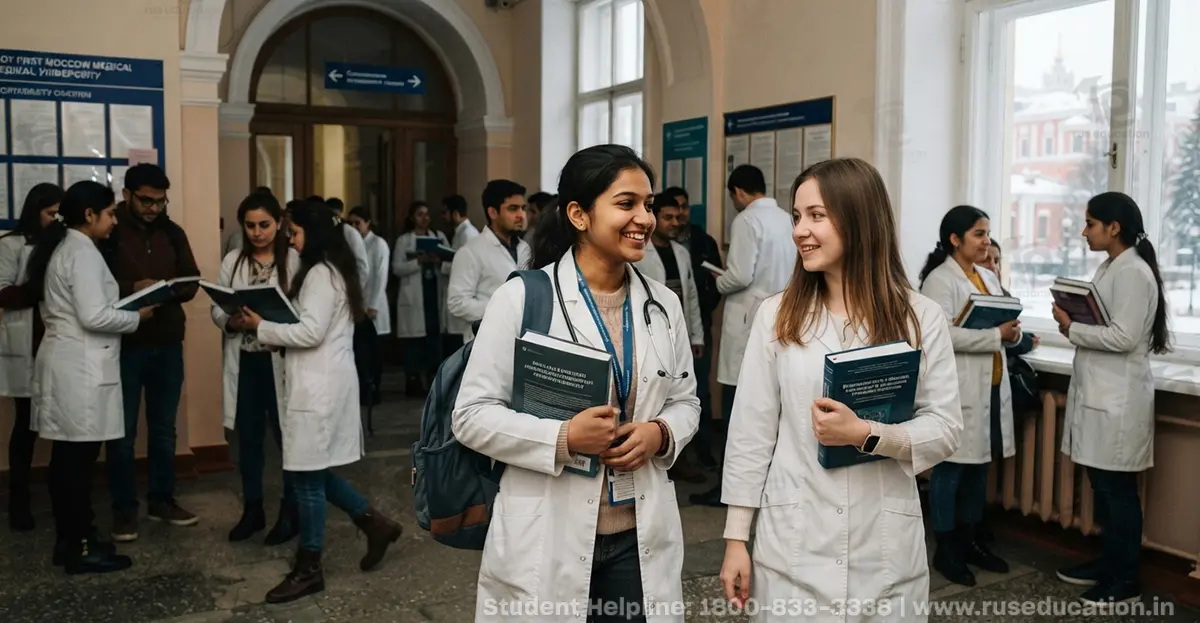
Lecture halls often mix Indian and other Russian medical students, which keeps classes lively.
Early years focus on Anatomy, Physiology & Biochemistry. Most lectures are conducted in English, but professors may also introduce Russian medical terminology. Students actively participate in discussions, maintain lecture notes, and prepare for regular assessments throughout the academic term.
Evening hours usually take place in laboratories where experiments make theory practical for students to observe. Some universities even use models and simulation equipment.
A glimpse into the morning routine of an Indian MBBS student in Russia, from university preparations to the start of a new day of medical learning.
Theory and practice support each other. A lecture on the heart makes more sense after studying a model of one. Supervised lab work also builds careful observation.
Clinical exposure is a process that happens gradually. In their first year, students will be involved in studying basic subjects before having any clinical exposure at hospitals.
A look at what Indian MBBS students eat throughout the day in Russia, from familiar Indian meals to everyday campus and hostel food.
Lunch is often eaten in the university canteen. Some universities provide Indian mess facilities, and vegetarian options are usually available.
Many students cook dal, rice & vegetables where hostel kitchens allow. Indian spices are sold in larger cities, which makes home-style cooking possible.
A glimpse into how Indian MBBS students in Russia unwind after university through hostel activities, exploring the city, spending time with friends, and enjoying their personal time.
Most students share rooms. Study areas, kitchens & laundry rooms are common, but rules differ by university, so check details before arriving.
Students handle laundry, cleaning & daily meals without family help. For many, this independence becomes one of the most valuable lessons of their MBBS years.
A glimpse into how Indian MBBS students adapt to Russian traditions, language, food, weather, and daily routines while making a new place feel like home.
Most students start with basic phrases for shops and transport. Russian becomes even more important during clinical training, when understanding patients matters.
Students celebrate Diwali and Holi where university arrangements permit. Cultural programmes and international friendships help newcomers feel at home.
A closer look at the everyday challenges Indian MBBS students may encounter in Russia, from language barriers and weather changes to food habits and adjusting to a new lifestyle.
Winters in Russia can be harsh, with temperatures often dropping to -10°C to -20°C or even lower in some regions. Warm clothing, thermal wear, and proper winter footwear are essential from day one. Language differences and unfamiliar food habits can also take time to adjust to.
Homesickness often appears during exams or festivals. Regular family calls and support from staff and fellow students make a real difference.
It’s a common myth that the MBBS program only consists of medical lectures and practicals, but that couldn’t be further from the truth! A typical day at an MBBS college will give you a chance to learn independence, responsibility, and adaptability. For the Indian student, being abroad will provide them with the chance to grow academically amidst all these changes as well.
Planning to pursue MBBS in Russia? Get expert guidance from Rus Education, your Official Admission Partner in India, to understand the admission process, university options, eligibility requirements, and essential steps for starting your medical education journey abroad.
What does a typical day look like for an Indian MBBS student in Russia?
Most students wake up around 6:30 to 7:30 AM, attend lectures or practicals from about 8:30 AM to mid-afternoon, eat in the canteen or hostel, study in the evening, and rest by 10 to 11 PM.
What do students do on weekends?
Many cook Indian meals, do laundry, shop at markets, explore the city, call family, and join Indian student community events.
How do students stay in touch with family in India?
Mostly, use WhatsApp, video calls, & voice notes. The time difference is about to 2.5 hour to 3 hour from india its manageable with scheduling.
What subjects are taught in the first year of MBBS?
The standard MBBS program is six years, including clinical training and internship, though the exact structure can vary by university.
How are students assessed?
Assessment includes written tests, oral exams, practical exams, and continuous evaluation. Pass requirements are set by each university.