Established in 1992, Rus Education is a proud reason of many who are currently living their dream and on the way to achieving their goal of becoming a doctor.
Where to Find Us
No 2 IP Estate Azad Bhawan Road New Delhi - 110002 1800-833-3338 del@ruseducation.in
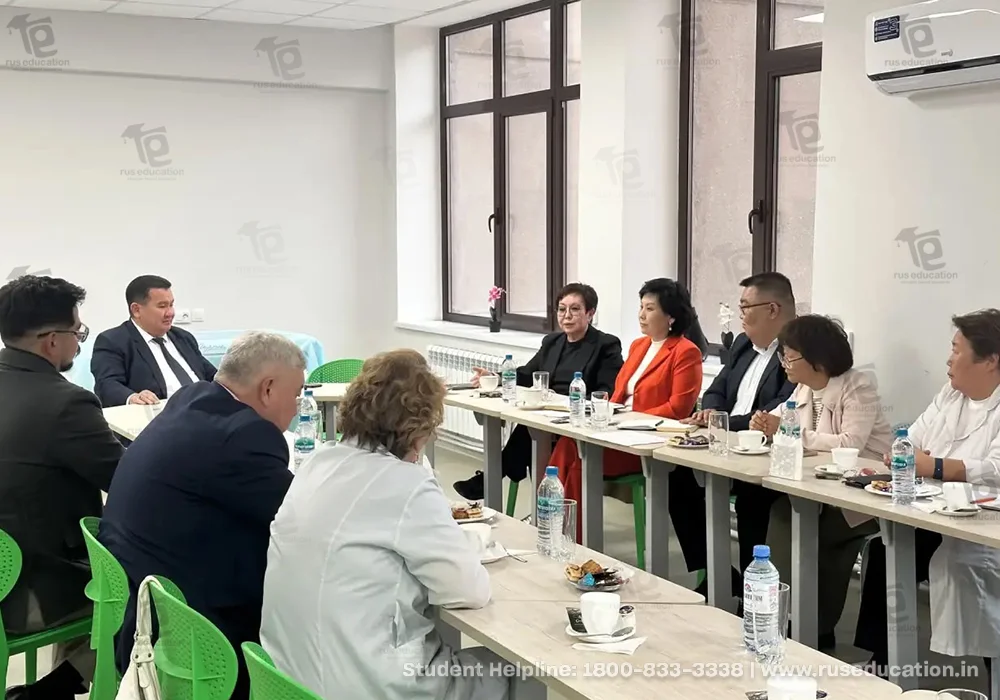
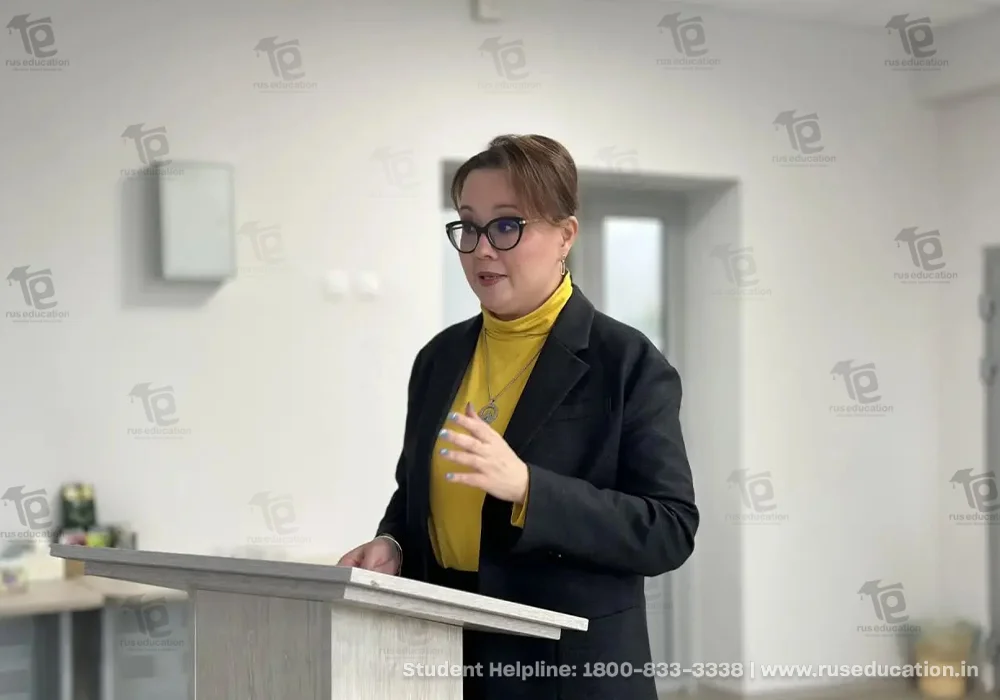
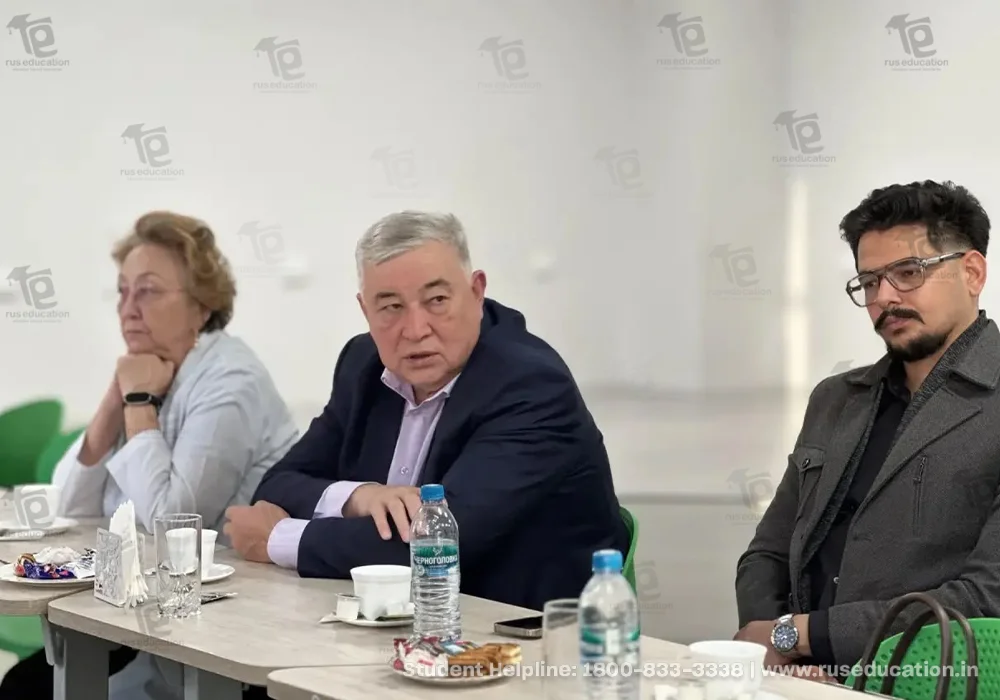
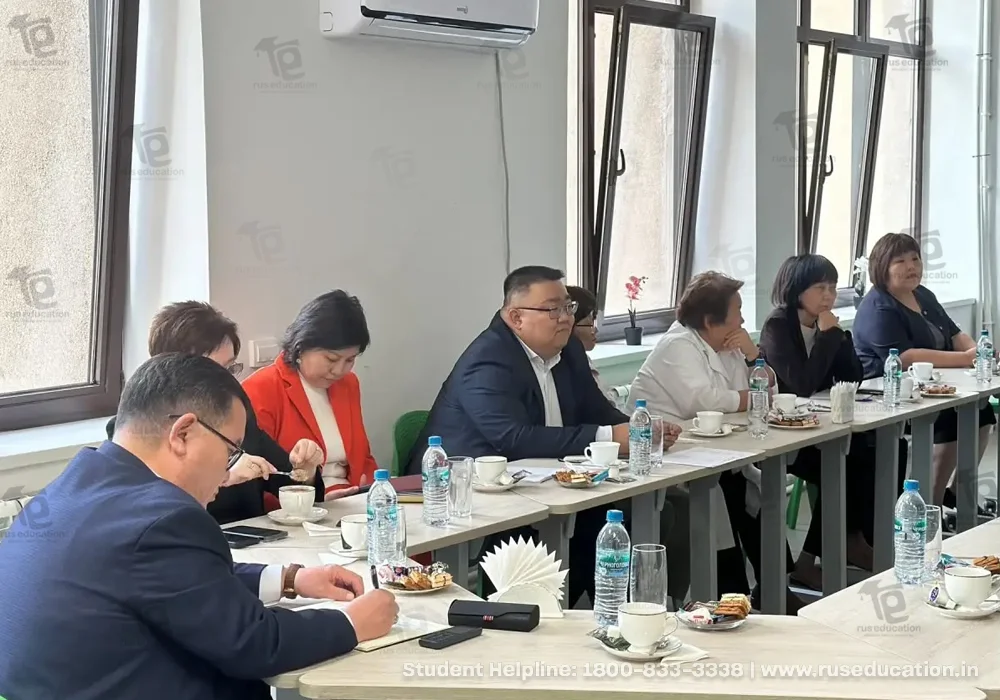
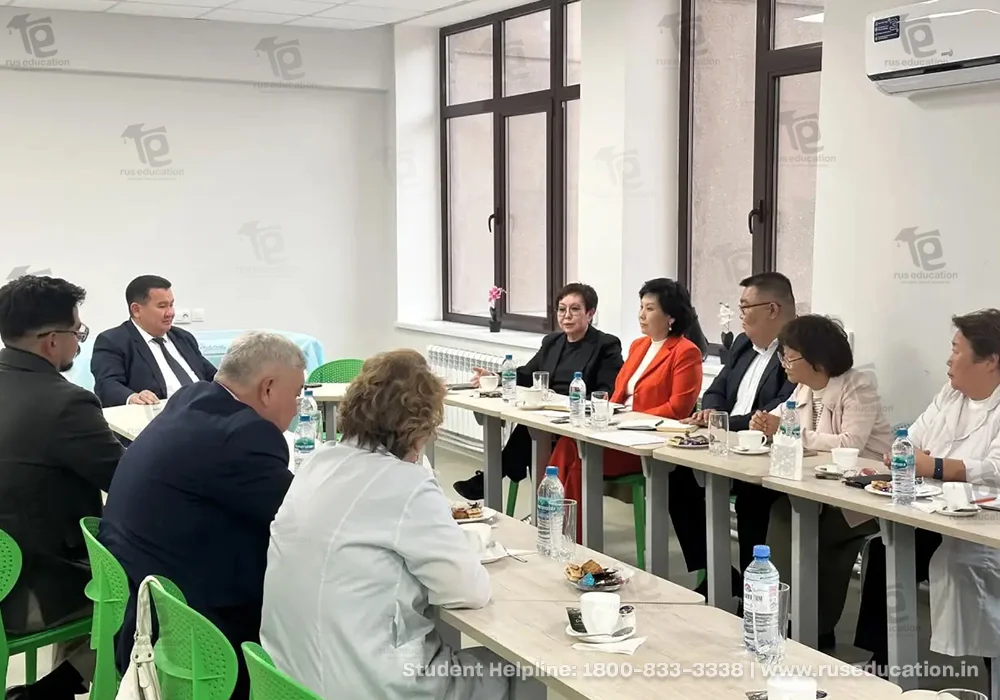
Kalmyk State University held public hearings on the development program for its Faculty of Medicine for 2027 – 2030. The main focus of this discussion was to integrate the Faculty of Medicine into the university’s development program with four core pillars: education, research, student development, and regional engagement.
The public hearings were centered around 4 Core Pillars
Education: quality, practical training, and the export of educational services
Research: establishing research teams and achieving applied outcomes
Student development: fostering professional values and supporting student-led projects
“University for the Region”: workforce development, public health, and sustainable partnerships
The Education pillar prioritizes high-quality academic programs, practical training, and the export of educational services. The objective is to strengthen the educational experience and ensure that students acquire the knowledge and practical competencies required for their future medical careers.
The research pillar focuses on establishing research teams and achieving applied scientific outcomes. These efforts aim to strengthen the faculty’s research capacity and connect scientific work with practical challenges in medicine and healthcare.
The student development pillar emphasizes the cultivation of professional values and support for student-led initiatives. It seeks to create an environment in which students can develop academically, professionally, and personally while actively contributing to the university community.
The fourth pillar, “University for the Region,” highlights KalmSU’s role in regional development through healthcare workforce training, public health initiatives, and sustainable partnerships. This approach positions the Faculty of Medicine as an important contributor to addressing regional healthcare priorities.
The development program for the Faculty of Medicine through 2030 outlines a transition from the initial launch phase to focusing on sustained quality.
Establishing a core, permanent faculty and staff base
Creating clinical training sites directly within medical institutions
Expanding facilities for the Department of Fundamental Disciplines
Developing a faculty-affiliated clinic, beginning with outpatient and primary care services
Planning for the eventual division of the clinical department into separate tracks for General Medicine and Pediatrics as the staff grows and the clinical workload increases
Ensuring the completion of the educational pathway through accreditation preparation and including a collaborative “network” model with Astrakhan State Medical University
These were the points discussed for integrating the Faculty of Medicine into the university’s overall development program. It is not just for increasing student enrollment but more about improving the quality of education.
The public hearings provided a framework for considering how the faculty’s individual projects and priorities can contribute to the university’s wider strategic goals. By linking each development area to specific projects and measurable outcomes, the program emphasizes accountability and results-oriented planning.