June 11, 2026

Established in 1992, Rus Education is a proud reason of many who are currently living their dream and on the way to achieving their goal of becoming a doctor.

Are you planning to do MBBS in Russia, but are confused about the visa process? After completing the admission process, one step that is quite crucial is obtaining a Russian student visa, which allows a student to legally stay and study in Russia.
Though the application process is simple, the student must ensure that they correctly arrange all the necessary documents and submit them on time.
This blog explains how to apply for a Russian student visa in 2026, including all the steps and different types of Russian student visas.
A Russian student visa is an official document providing entry for foreign nationals seeking to pursue academic studies, language courses, or conduct research at a recognised university or college in India.
A student cannot apply for a student visa without a formal invitation letter from the Russian Ministry of Internal Affairs or the Ministry of Foreign Affairs.
The invitation letter is one of the most important documents specifying the following details:
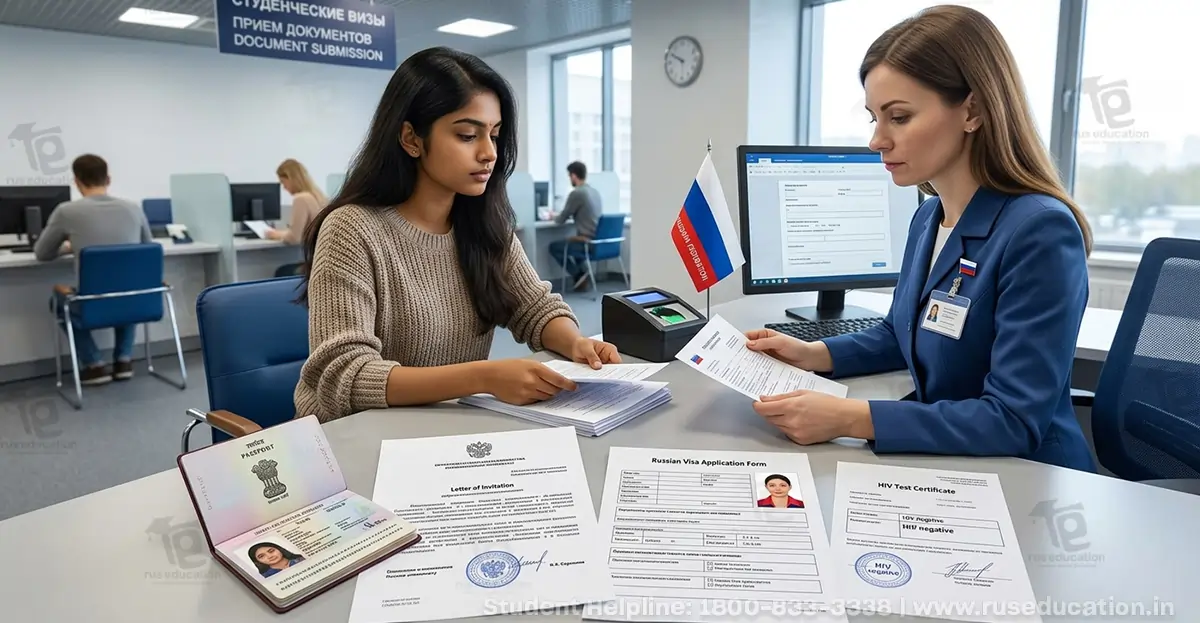
A student must ensure that they have fulfilled all the Russia student visa requirements by gathering all the required documents before submitting their visa application at the consulate. The list of Russian student visa documents required includes:
Note: Medical requirements also depend on the country and current rules.
Submit your physical documents to the Regional Russian Embassy, Consulate, or authorized Russian visa application center. You will need to pay the visa processing fee, which varies as per the citizenship and desired processing speed.
Sometimes, students are also required to give a short visa interview with questions usually asked about:
Once your visa application has been approved, your study visa for Russia will be stamped on your passport. Make sure you check details like:
Russian student visas are initially issued as single-entry visas for 90 days. Once you have arrived in Russia, your university will guide you through registering your visa with the local migration office and help you extend it to cover your full academic year.
You should begin the process of extending your visa well in advance of its expiration date, at least 45-90 days before expiry.
1. Single-entry visa – A single-entry student visa allows students to enter Russia once. It is usually issued for students who arrive in Russia for the first time to start their studies. This visa is usually valid for 90 days.
2. Double-entry visa – This type of visa allows students a double entry into Russia during its validity period. It is useful for students who need to travel outside Russia soon after arrival.
3. Multiple-entry visa – Upon arrival and registration, universities assist students in getting a multiple-entry visa, which allows multiple exits and entries during the study tenure. This extension period is usually for up to a period of one year, and can be renewed every year.
Students must avoid these mistakes:
Also Read: Pros and Cons of Studying MBBS in Russia for Indian Students
Applying for a Russian student visa in 2026 is a simple process if done systematically. However, visa regulations and documentation requirements can occasionally change; so students should always check the latest guidelines from the Russian Embassy, Consulate, or from the university’s office before submitting their application. Proper planning and timely action are required to ensure a smooth visa process for Russia and allow students to focus on their academic goals, the very beginning of their educational journey.
If you wish to pursue an MBBS in Russia, feel free to contact Rus Education to get all the guidance on starting your medical journey abroad.
Q.1 What are the documents required for a Russian student visa application?
Ans. The following documents are required for a Russian student visa:
Q.2 Which kind of visa is issued upon arrival in Russia?
Ans. A single-entry visa is issued initially for a period of 90 days upon arrival to Russia.
Q.3 What are the three types of Russian student visas?
Ans. The three types of Russian visas are: