

September 21, 2026

Established in 1992, Rus Education is a proud reason of many who are currently living their dream and on the way to achieving their goal of becoming a doctor.

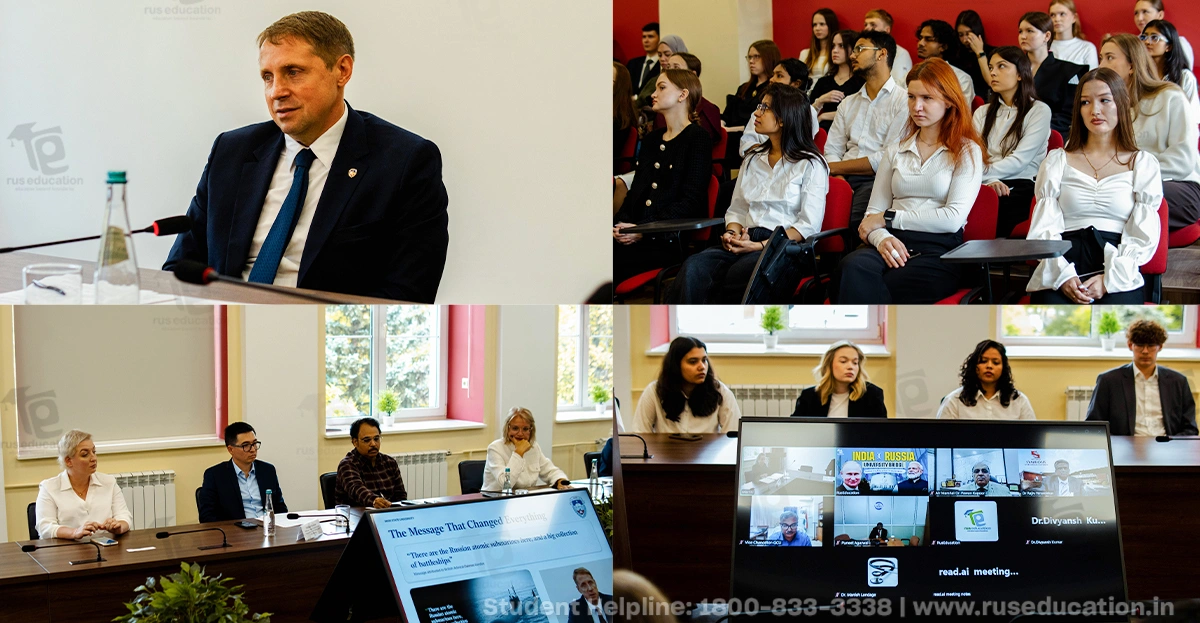
Mari State University, in collaboration with Rus Education, organised a round table conference in New Delhi on the sidelines of the 18th BRICS Summit 2026, bringing together academic leaders, education professionals, researchers and medical students from India and Russia.
Titled “University Bridge: Russia and India in the BRICS Scientific and Educational Space,” the conference focused on strengthening academic cooperation between the two countries through education, scientific research, student mobility and medical education.
The conference provided a platform for Indian and Russian academic representatives to discuss the evolving role of universities in building institutional partnerships and strengthening people-to-people connections. Discussions also examined opportunities for deeper cooperation in education, science, research and student mobility within the broader BRICS academic and scientific space.
The round table brought together representatives from Mari State University and several Indian higher education institutions, creating a common platform for discussions on international education and academic cooperation.
Representing Mari State University were Prof. Mikhail Nikolaevich Shvetsov, Rector of the university; Fominykh Aleksey Evgenievich, Associate Professor in the Department of Intercultural Communication; Natalia Bastrakova, Deputy Director for Work with Foreign Students at the Medical Institute; and Mikhail Vasilyevich Dubinin, Professor in the Department of Biochemistry, Cell Biology and Microbiology. Faculty members and fifth-year students of the university’s Medical Institute also participated in the event.
The Indian academic delegation included Air Marshal Dr. Pawan Kapoor (Retd.), Technical Advisor at Rus Education and Chairman of the Advisory Committee on FMG Qualifications, NMC, India; Puneet Agarwal, Vice Chairman of Inderprastha Engineering College; Prof. Kandarpa Das, Vice Chancellor of Girijananda Chowdhury University, Guwahati; Dr. Divyansh Kumar; Dr. Manish Landage; and Rajiv Yeravdekar, Vice-Chancellor of Symbiosis International University. Representatives from Santosh University and other institutions also participated.
The participation of academic representatives from different institutions enabled the conference to address India-Russia cooperation from several perspectives, including higher education, research, culture, medical education and international student mobility.
A key focus of the conference was the role of education in strengthening the longstanding relationship between India and Russia.
Opening the academic dialogue, Prof. Mikhail Nikolaevich Shvetsov spoke about the importance of educational and cultural exchanges in developing mutual understanding between the two countries. He also highlighted the role universities can play in connecting societies through academic interaction, research collaboration and student mobility.
The discussion examined the history and prospects of India-Russia cooperation and the ways in which higher education can contribute to stronger institutional and people-to-people connections.
The role of education was therefore considered not only from the perspective of academic programmes, but also as a means of encouraging interaction between students, faculty members, researchers and institutions in both countries.
The conference also explored the growing relevance of academic cooperation within the BRICS framework.
Fominykh Aleksey Evgenievich, Associate Professor in the Department of Intercultural Communication at Mari State University, shared perspectives on academic engagement within BRICS and the potential for cooperation across education, culture and research.
The discussion also considered India and Russia’s role in BRICS and the potential of multilateral cooperation, with universities positioned as important platforms for knowledge exchange and academic interaction.
India hosted the 18th BRICS Summit in New Delhi on September 12 and 13, 2026. The summit brought together representatives of the 11 BRICS member countries and addressed issues of global and regional significance.
Against this backdrop, the roundtable provided an academic platform to examine how Indian and Russian universities can contribute to broader cooperation in education, research, and human capital development.
Scientific research was another major area of discussion during the conference.
Mikhail Vasilyevich Dubinin, Professor in the Department of Biochemistry, Cell Biology and Microbiology at Mari State University, discussed ongoing research cooperation and the scope for future joint academic and scientific initiatives.
The discussion highlighted the importance of research partnerships in creating opportunities for academics and institutions to exchange expertise and explore areas of common interest.
Such cooperation can also complement student and faculty mobility by creating academic connections that extend beyond individual programmes and institutions.
Medical education was another key theme at the round table, with representatives from the Medical Institute of Mari State University and fifth-year medical students participating.
The participation of Indian medical students added a direct student perspective to the discussion on international education. The conference highlighted the growing Indian student community at Mari State University, particularly among medical students, and the role that student experiences can play in shaping international academic relationships.
The discussion on student mobility also reflected the wider movement of Indian students towards Russian universities, particularly for medical education. Air Marshal Dr. Pawan Kapoor (Retd.) highlighted the role of education in creating sustained institutional and people-to-people connections between India and Russia.
For students studying abroad, such academic interactions can provide opportunities to engage with faculty members, university representatives and wider academic communities while strengthening connections between their home and host countries.
The central idea behind the conference was reflected in its title – “University Bridge.” The discussions brought together education, research, culture, and student mobility as interconnected areas through which universities can strengthen international cooperation.
The event also demonstrated how academic institutions can contribute to India-Russia relations by facilitating interaction among students, researchers, and education leaders.
For Mari State University, the participation of its academic leadership, faculty members and medical students provided an opportunity to engage directly with Indian academic representatives. For Rus Education, the conference created a platform to participate in discussions around international medical education and the evolving academic relationship between India and Russia.
The round table concluded with a broader focus on opportunities for continued cooperation between Indian and Russian academic institutions.
From higher education and scientific research to medical education, student mobility and cultural exchange, the discussions covered several areas that can contribute to stronger academic connections between the two countries.
Held on the sidelines of the 18th BRICS Summit, the Mari State University-Rus Education round table brought together academic communities from India and Russia to exchange perspectives and explore avenues for deeper cooperation in the scientific and educational space.
The event underlined the role universities can play in creating lasting academic connections and providing students and researchers with opportunities to participate in an increasingly international higher education environment.