

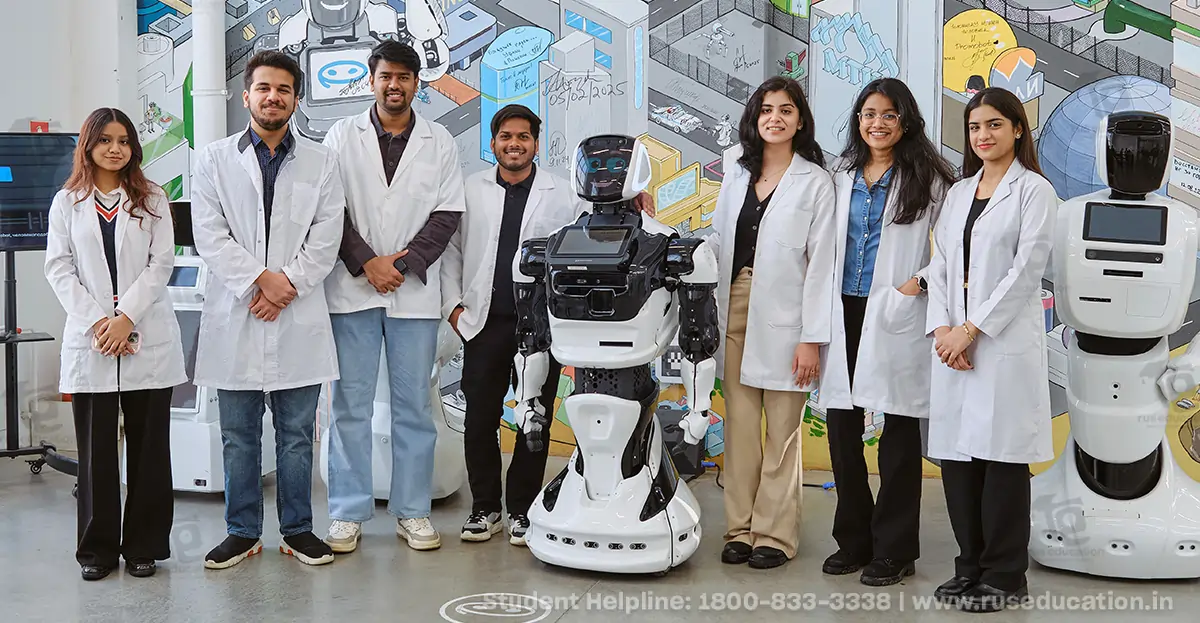
Students of Perm State Medical University recently stepped into an immersive learning experience that blended their medical training with emerging technology. During a dedicated interactive session featuring Promobot, these future healthcare professionals explored how advanced service robots are beginning to influence communication and everyday clinical tasks.
Curiosity, Collaboration, and Real-Time Interaction
The event saw a series of dynamic and engaging moments: students testing the robot’s speech-recognition capabilities, posing medical questions, and observing how it responded with expressive movements and lifelike gestures. Many participants experienced robotics of this kind for the first time. It offered them a rare, close-up perspective on tools increasingly used in hospitals, clinics, and rehabilitation centers around the world.
From thoughtful observation to excited experimentation, each moment revealed genuine fascination. Students gathered in groups, exchanged impressions, and even shared laughs as the robot interacted with them. This demonstrated the potential of technology to create meaningful, approachable connections in healthcare settings.
Imagining the Role of Technology in Tomorrow’s Clinics
Beyond the novelty, what stands out most is the students’ enthusiasm. The encounter encouraged them to envision how robotics could reduce routine workloads and enhance patient comfort. These reflections underscore an important reality: the next generation of medical professionals must be prepared to navigate a healthcare environment where digital solutions and human expertise work side by side.
This event beautifully illustrates why the university remains committed to fostering innovation. By offering students opportunities to engage with forward-thinking tools, it equips them not only with knowledge but with the mindset needed to adapt and improve modern care.
A Celebration of People and Progress
The students’ energy and openness to learning reflect a hopeful vision, one where compassionate care and intelligent systems unite to create smarter and more patient-centered healthcare. Through these moments, we are reminded that the future of medicine is not defined solely by machines, but by the people who will use them to heal and make a lasting difference.